
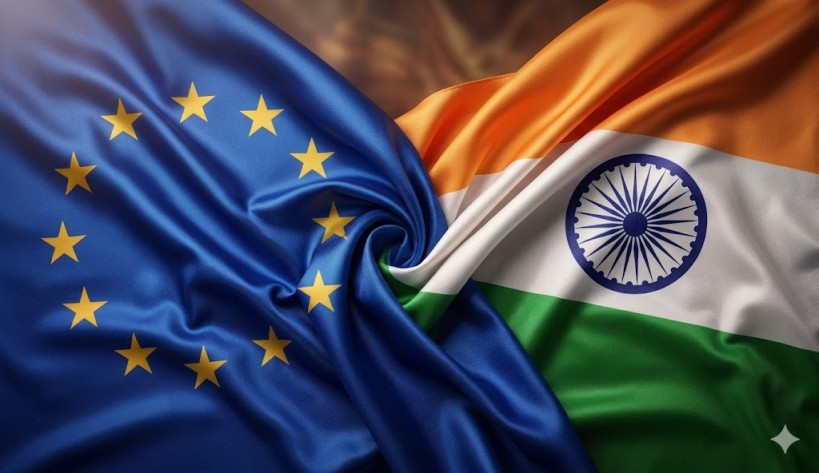
India and the European Union are set to fast-track their efforts to finalize a Free Trade Agreement (FTA) by the end of this year, marking a significant advancement in their economic relations. This decision emerged from a high-level trilateral meeting involving Indian Prime Minister Narendra Modi, European Council President António Costa, and European Commission President Ursula von der Leyen, held during the G7 Summit in Evian, France. The envisioned agreement aims to encompass a wide range of sectors including goods, services, digital trade, investment, and technology cooperation, setting the stage for one of the largest trade partnerships globally.
The proposed FTA, once formalized, would establish an extensive free trade zone connecting nearly two billion people and covering approximately 25% of the world’s economic output. Both India and the EU are also looking to enhance collaboration in strategic areas such as defense, connectivity, and infrastructure projects, notably the India–Middle East–Europe Economic Corridor. With negotiations reportedly advancing swiftly since early this year, both parties are now concentrating on ironing out legal and technical specifics to pave the way for the agreement’s official signing.
European leaders have emphasized the strategic significance of this partnership in the face of shifting global supply chains, portraying the FTA as a pivotal framework to bolster economic integration between India and Europe. Prime Minister Modi underscored the crucial role of robust India-EU relations in fostering stability and promoting inclusive growth. The European leaders, on their part, highlighted the partnership’s capacity to tackle global economic and geopolitical challenges.
The trilateral meeting also addressed wider cooperation in trade and investment, alongside deliberations on regional and international issues of mutual interest. Officials from both sides conveyed optimism about the ongoing momentum, with expectations of continued high-level interactions in the coming months leading up to the planned agreement signing. This development signals a promising phase in India-EU relations, with both parties eager to capitalize on the potential benefits of this comprehensive trade pact.