
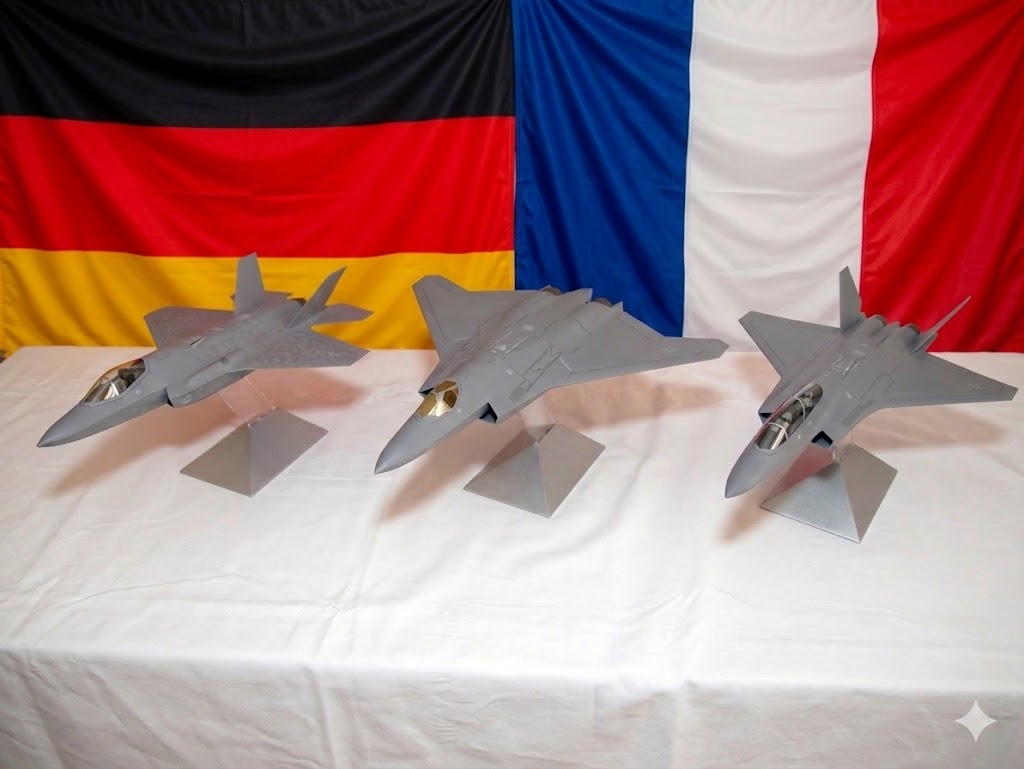
France and Germany have called off their collaborative effort on the Future Combat Air System (FCAS), a significant blow to European defence collaboration. Initiated in 2017 by French President Emmanuel Macron and then-German Chancellor Angela Merkel, the project aimed to develop a state-of-the-art fighter jet to succeed France’s Rafale jets and the Eurofighter fleets used by Germany and Spain by around 2040.
The decision to abandon the project stems from ongoing conflicts between Dassault Aviation of France and Airbus, representing German and Spanish interests. The two companies struggled to find common ground on several critical issues, including leadership roles, the management structure, and intellectual property rights within the programme. Dassault wanted to lead the development to protect its technology, whereas Airbus pushed for a more equitable partnership with shared technology access among the involved countries.
Further complicating matters were divergent views between Paris and Berlin on the fighter jet’s operational specifications. France advocated for a single European aircraft that could carry nuclear weapons and be deployed from aircraft carriers, while Germany’s military requirements were notably different. Despite multiple political interventions and mediation efforts, officials ultimately decided that the impasse was insurmountable.
While the fighter jet aspect of the FCAS has been shelved, European authorities suggest that elements of the programme might persist. Work on complementary technologies, such as advanced drones and a secure combat data network intended to link aircraft and military systems, may continue independently. These components could still play a role in enhancing Europe’s defence capabilities, even as the primary project has faltered.
The collapse of the FCAS initiative underscores the challenges of orchestrating large-scale military projects across multiple nations and industries. It represents a significant hurdle in the path of European defence integration, highlighting the complexities and disagreements that can arise when diverse national and industrial interests collide.