
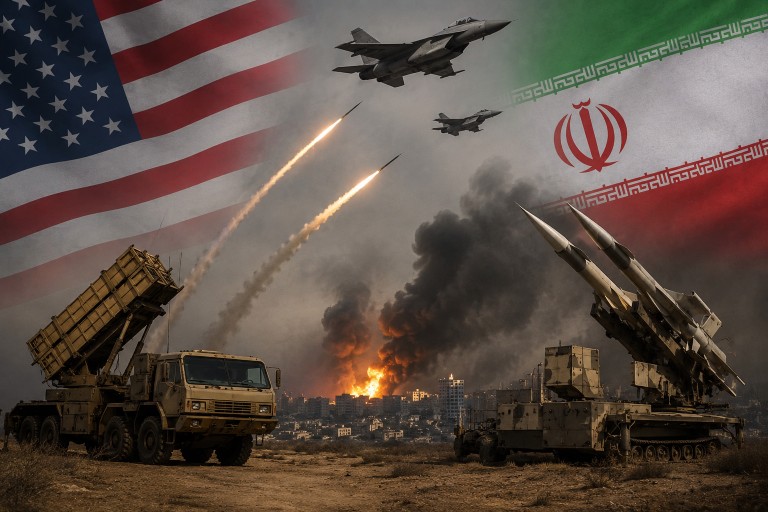
Military tensions between the United States and Iran have heightened for the sixth straight day, casting doubt on a recently established interim peace framework and escalating fears of a wider regional conflict. The U.S. has launched fresh strikes near Tehran and targeted a vessel near Iran’s Kharg Island, citing ignored warnings. Iranian officials have reported numerous casualties from these operations and have condemned the U.S. actions.
In retaliation, Iran has fired missiles and deployed drones toward Bahrain, Jordan, and Kuwait, all of which host U.S. military bases. Iraqi authorities noted an intercepted drone attack near Erbil, and operations in Basra were momentarily halted following a drone strike on a tanker, though it caused no major damage. The Strait of Hormuz, a vital global energy corridor, has also become a flashpoint, with Iran announcing its closure and warning of expanded military actions if further U.S. strikes on Iranian infrastructure occur. Iranian-backed groups in the region have been put on alert, intensifying concerns over potential disruptions to global shipping routes.
The escalating conflict has also impacted international energy markets, with oil prices reaching approximately $85 per barrel as vessel traffic through the Strait of Hormuz decreases. In response to the volatile security situation, several nations, including India, have advised their shipping companies to avoid sending merchant vessels and crews through this critical chokepoint.
Despite the ongoing military confrontations, U.S. President Donald Trump has stated that Washington remains open to a negotiated resolution. However, Iranian leaders have maintained they will not engage in talks under military duress. Diplomatic efforts by regional mediators have thus far been unsuccessful in de-escalating the situation, leaving the path to peace uncertain.