
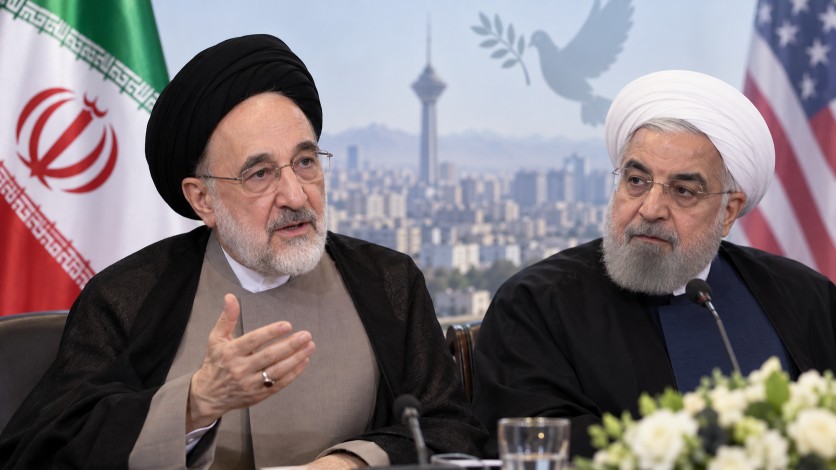
In a significant shift from Iran’s prevailing hardline stance, former Presidents Mohammad Khatami and Hassan Rouhani have urged for a resolution to the ongoing conflict with the United States through what they term an “honourable” or “dignified” peace. Rouhani has taken this further by suggesting that the Iranian populace should be involved in the decision-making process regarding the continuation of hostilities. Addressing former officials, he questioned the sustainability of Iran’s confrontational approach against major powers if it lacks public support.
Khatami echoed these sentiments, cautioning against governance driven by prolonged wartime fervor. He advocated for tempered diplomacy and negotiation, emphasizing that Iran’s long-term national interests should supersede perpetual confrontation. These calls for peace and dialogue have sparked a backlash from Iranian hardliners, with conservative media and loyalist gatherings condemning the former leaders for what they see as promoting surrender. The editor of the conservative newspaper Kayhan has even called for investigations into the two ex-presidents.
The discussion emerges amid escalating economic pressures on Iran, exacerbated by rising fuel prices and dwindling oil revenues. Additionally, the strategic Strait of Hormuz remains a flashpoint for global energy stability, further complicating the situation. While former leaders push for a diplomatic route, current Iranian officials maintain a more aggressive public stance, indicating that Tehran might take a more offensive military approach if diplomatic efforts with Washington fall through. This stance raises the possibility that economic strains could lead to further conflict escalation rather than prompt concessions.
Meanwhile, indications of persistent regional diplomacy are apparent. Iran and Saudi Arabia have sustained communications concerning regional tensions, with high-level discussions aimed at averting further escalation and fostering stability. These mixed signals reflect a deepening divide between advocates of diplomacy and those favoring continued resistance.
The contrast between the former leaders’ advocacy for negotiations and the current leadership’s warnings of military escalation underscores a growing schism within Iran’s political landscape. As former presidents push for dialogue and public engagement, the incumbent government remains steadfast in its readiness for military action should its demands remain unaddressed.