
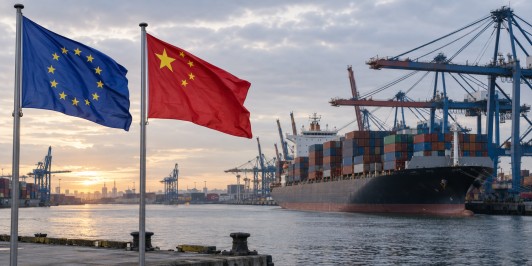
The European Union’s trade deficit with China surged to €36.5 billion in July 2026, as imports from China continued to significantly outpace exports. According to Eurostat, the EU imported goods worth €53.9 billion from China, marking an 8% increase compared to the same month last year, while its exports to China decreased by 1.6% to €17.4 billion.
This growing trade imbalance has been a persistent issue for the EU, with the deficit expanding from €32.3 billion in July 2025. Over the first seven months of 2026, the EU’s cumulative trade deficit with China reached approximately €234 billion, underscoring the ongoing economic disparity between the two regions.
European officials are under mounting pressure to address this imbalance, particularly in sectors such as hybrid vehicles and chemicals, where imports from China have seen significant growth. Since the EU imposed additional tariffs on Chinese electric vehicles in 2024, imports of hybrid vehicles have increased, as these models fall under different tariff regulations. In response, EU officials are exploring measures, including voluntary limits on Chinese hybrid vehicle exports, to mitigate trade tensions.
As the EU seeks to recalibrate its economic relationship with China, trade negotiations are expected to feature prominently in upcoming discussions. Brussels aims to bolster European exports while reducing reliance on Chinese goods in strategic sectors, reflecting broader concerns over economic dependency and the need for a more balanced trade partnership with China.